Certified Arborist Services in Milwaukee WI
Your trees need more than a crew with a chainsaw. They need a trained expert. Someone who can look at a tree, read the signs, and tell you exactly what is wrong. Tree Removal Milwaukee Co puts ISA Certified Arborists on every job across Milwaukee County.We diagnose tree diseases. We check for hazards. We recommend treatments. And we handle removals when that is the honest answer.We protect your trees, your home, and your family. That starts with the right training and the right credentials.
 Reviews from Our Customers
 What Is an ISA Certified Arborist?
ISA stands for the International Society of Arboriculture. It is the most trusted professional group in the tree care industry worldwide.
To earn the ISA Certified Arborist credential, a person must have at least three years of full-time hands-on work in arboriculture. Then they must pass a written exam. That exam covers tree biology, soil science, risk assessment, pruning standards, disease identification, and safe work practices.
After passing, arborists must earn continuing education credits every three years to keep the credential active. This keeps them current on the latest research in tree care.
When you hire Tree Removal Milwaukee Co, you get credentialed arborists who know Milwaukee’s trees, its soil conditions, and its most common tree diseases. You get honest advice from someone who has earned the right to give it.
The Wisconsin Arborist Association is a chapter of the ISA. It represents over 700 credentialed tree care professionals across the state. Our team holds active ISA certification and stays current through WAA continuing education each year.
How Our Arborist Consultation Works
No surprises. No pressure. Here is exactly what happens when you book a consultation with Tree Removal Milwaukee Co.
1. Free On-Site Consultation
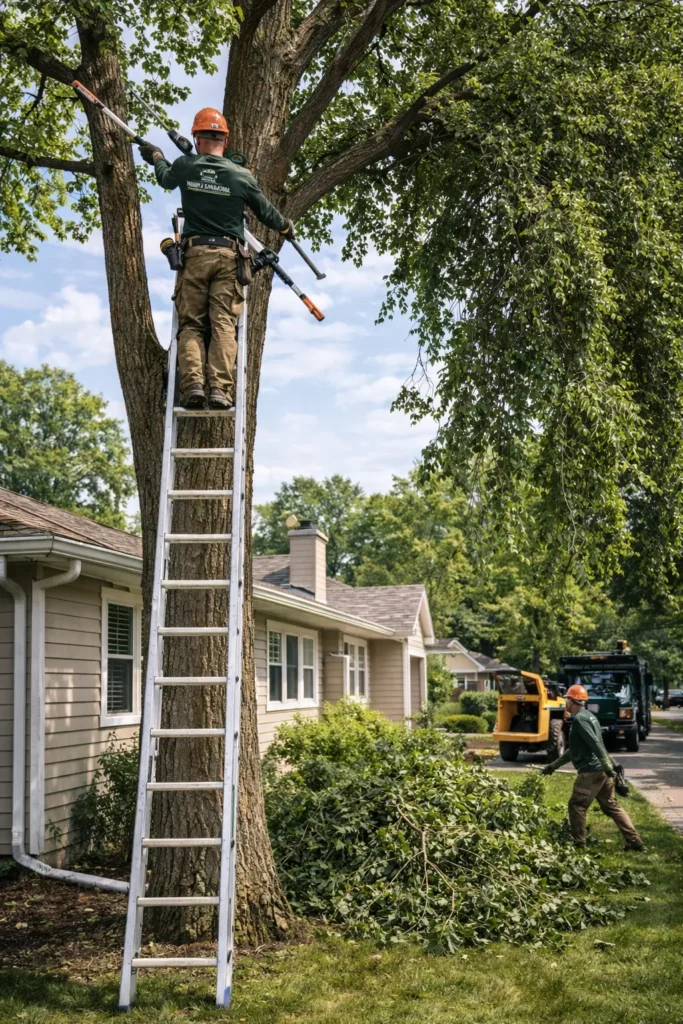
Your arborist visits your property at no charge. We walk the site with you and look at every tree you are concerned about. We ask questions about what you have noticed. You are part of the process from the very first minute.
2. Full Tree Assessment
We inspect the crown, bark, trunk, root zone, and soil conditions. We use ISA risk assessment standards. We check for EAB, oak wilt, structural defects, root damage from Milwaukee’s clay soil, and any other health concerns we find.
3. Plain-Language Report and Recommendations
We explain what we found in plain language. No tree jargon. No pressure. We give you written recommendations covering treatment options, a monitoring plan, or removal if that is the honest answer. You leave knowing exactly where your tree stands.
4. You Decide What Happens Next
We give you the facts and the options. The decision is always yours. If you move forward with treatment, pruning, or removal, we schedule the work and handle every step including any permit requirements with the Milwaukee DPW Forestry Division.
Our Certified Arborist Services in Milwaukee
Every service listed here is performed or directly supervised by an ISA Certified Arborist. No guesswork. No shortcuts.
Tree Health Assessment and Disease Diagnosis
Milwaukee’s trees face real threats every year. Emerald Ash Borer has damaged thousands of ash trees across the city since the early 2000s. Oak wilt is spreading through Milwaukee County as warmer winters make the fungus harder to stop. Dutch elm disease continues to affect older neighborhoods with mature elm canopies. Our arborists inspect your trees for early warning signs of these diseases and others. We name the problem. We explain it in plain language. And we give you honest options for treatment or removal.
Tree Risk Assessment
A tree does not have to look dead to be a hazard. Root decay, trunk cracks, weak branch structure, and pest damage can all make a tree dangerous well before the outside shows it. Our arborists use ISA tree risk assessment standards to check every tree on your property. We rate the risk level, identify failure zones, and give you a written report with clear next steps. Milwaukee homeowners near the lakefront know what one ice storm can do to a weak tree.
Tree Pruning and Crown Care
Pruning done the wrong way can kill a tree or open it up to disease. Our arborists follow ANSI A300 pruning standards on every job. That means no topping, no flush cuts, and no over-pruning that stresses the tree. We prune for structure, safety, and long-term health. Milwaukee’s silver maples, oaks, and ash trees respond well to proper crown thinning. We also follow Wisconsin DNR seasonal windows for oak trees to prevent spreading oak wilt.
Plant Health Care and Pest Treatment
When a tree can be saved, we save it. Our arborists build plant health care plans for Milwaukee homeowners who want to protect their trees from EAB, oak wilt, fungal disease, and soil problems. Treatment options include trunk injections for EAB management, fungicide treatments for disease control, deep root fertilization for trees in Milwaukee’s clay-heavy soil, and soil aeration for compacted urban yards. Every plan is based on an honest look at whether treatment is likely to work
Tree Removal When It Is the Right Call
Our arborists will not recommend removal unless it is the safest and most practical option. When it is, Tree Removal Milwaukee Co handles the full job. We use cranes, bucket trucks, rigging systems, and sectional cutting to take down trees of any size. We work safely in Milwaukee’s tight residential lots and lakeside properties. We manage the permit process with the City of Milwaukee DPW Forestry Division at no extra charge. Full cleanup and haul-away is included in every removal.
Why Hire an ISA Certified Arborist in Milwaukee?
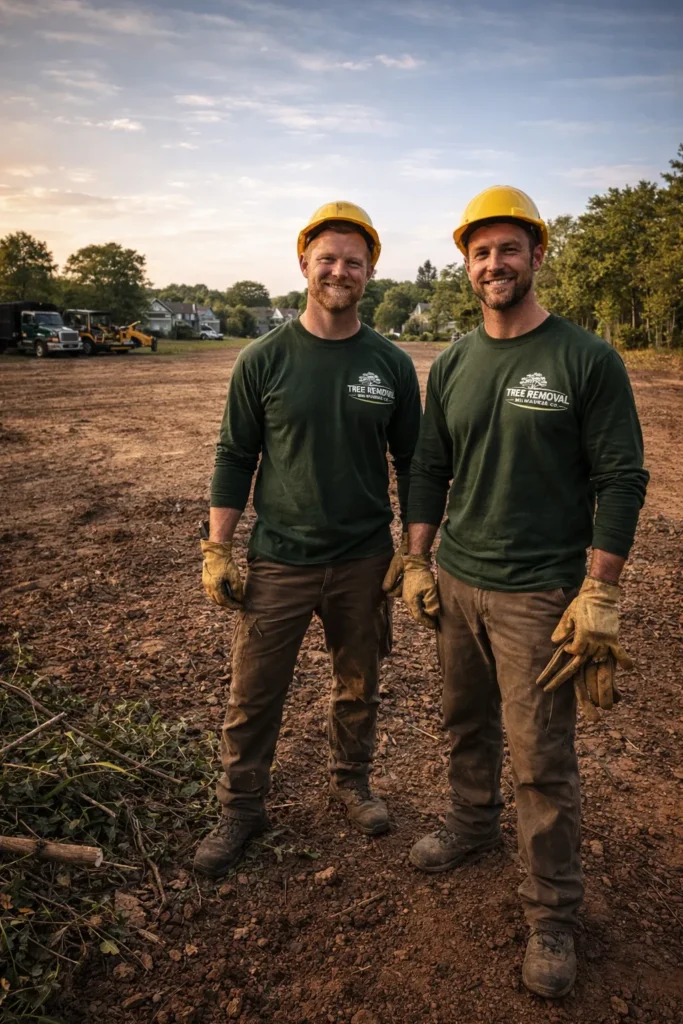
Anyone can call themselves a tree expert. Only someone who has passed the ISA exam, logged the required work experience, and stayed current on continuing education can carry the ISA Certified Arborist title. Here is what that difference means for you.
Accurate diagnosis, not guesswork. A trained arborist spots EAB, oak wilt, Dutch elm disease, root rot, and structural defects that an uncertified crew will miss. An accurate diagnosis is the only way to know whether your tree can be saved.
Safe work on every job. ISA certification covers safe climbing, rigging, and equipment use. Our crew follows OSHA tree care standards and ANSI Z133 safety requirements on every Milwaukee job. That protects your property and our people.
Honest advice that puts your tree first. We do not recommend removal unless it is the right call. We tell you when a tree can be treated, when it needs watching, and when it needs to come down. That honesty is why Milwaukee homeowners call us back.
Written documentation for your insurance claim. When a certified arborist assesses your tree and makes a recommendation, you have a written record. That record supports your homeowner insurance claim if a tree causes damage. An uncertified crew’s word carries no weight with your insurer.
Milwaukee's Biggest Tree Health Threats Right Now
Milwaukee’s urban forest faces three major threats. Knowing the signs early can save your trees and protect your property.
Emerald Ash Borer (EAB)
EAB larvae tunnel under the bark and cut off the tree’s ability to move water and nutrients. Look for crown thinning that starts at the top of the tree. Watch for small D-shaped exit holes about the size of a pencil eraser on the bark. Check for S-shaped feeding galleries under sections of peeling bark. Heavy woodpecker activity on the trunk is also a clear sign. The City of Milwaukee has mapped over 15,000 ash trees on private parcels that may be affected. An infested ash tree can become brittle and dangerous within two to three growing seasons.
Oak Wilt
Oak wilt is a fungal disease. It spreads through shared root systems between neighboring oaks and through sap beetles that carry spores between trees. Red oaks can die within weeks of getting infected. The Wisconsin DNR has tracked oak wilt spreading into new parts of Milwaukee County each year. Watch for rapid browning of leaves starting at the outer edges. Look for brown streaking just under the bark. Sudden dieback on one side of the crown is also a warning sign. Do not prune oaks between April and July. Open wounds during that window can spread the disease fast.
Dutch Elm Disease
Milwaukee’s older neighborhoods, including the East Side and Riverwest, still have large populations of American elm trees. Dutch elm disease is caused by a fungus spread by elm bark beetles. Watch for wilting and yellowing leaves on one branch. The yellowing then spreads through the crown over the following weeks. Early detection by a trained arborist can sometimes allow targeted removal and fungicide treatment to protect nearby elms.
Spongy Moth (Formerly Gypsy Moth)
Spongy moths are a rising threat in Milwaukee, causing severe leaf loss. Repeated defoliation weakens trees and can lead to death. Watch for tan, fuzzy egg masses on trunks and surfaces. In late spring, look for hairy caterpillars and rapid leaf loss. Oaks are most affected, but other hardwoods are also at risk. Early treatment and egg removal help prevent serious damage.
Certified Arborist in Milwaukee WI Common Questions
How much does an arborist consultation cost in Milwaukee?
Tree Removal Milwaukee Co provides free on-site consultations for tree assessment and removal estimates. No charge to come look at your tree.
If you need a formal written risk assessment report, fees typically range from $150 to $350. That depends on the number of trees and the level of detail needed. We are always clear about any fees before any work begins.
What does an ISA Certified Arborist actually do?
Think of a certified arborist the way you think of a doctor for your trees. They find what is wrong and tell you what to do about it.
In Milwaukee, that means spotting Emerald Ash Borer damage, oak wilt, and Dutch elm disease. It also means finding root rot from clay soil and structural problems caused by past storms or poor pruning.
A certified arborist can also perform or oversee tree pruning, plant health care treatments, risk assessments, and removals when needed.
How is a certified arborist different from a regular tree service?
A regular tree crew can cut branches and take down trees. A certified arborist can tell you whether those branches need to come off in the first place. They can tell you whether the tree is healthy, whether it is a hazard, and whether a disease could spread to your other trees.
The ISA credential requires passing a comprehensive exam and keeping up with continuing education credits every three years. In Milwaukee, where EAB, oak wilt, and lake-effect storm damage are ongoing problems, that training matters a lot before any work begins.
Can my ash tree be saved from Emerald Ash Borer?
Sometimes yes. It depends on how far the infestation has gone. Ash trees that still have more than half of their crown intact and show no major structural weakness may be good candidates for trunk injection treatment. The most effective option right now is a product called emamectin benzoate. Treatments need to be reapplied every two to three years.
Trees that are already heavily infested or structurally weak are usually past the point where treatment is worth the cost. Our arborists will give you a straight answer on whether your ash tree is worth treating or whether removal is the safer choice.
When should I call a certified arborist instead of handling it myself?
Call a certified arborist if you notice any of these signs. Crown dieback or thinning at the top of the tree. Unusual leaf color changes in summer. Fungal growth at the base of the trunk. Heavy woodpecker activity on a tree that looked healthy before. Sudden leaning. Visible cracks in the trunk or major branches. You should also call before pruning any oak tree between April and July. Cutting during that window can spread oak wilt through open wounds. Never attempt to remove a large tree or heavy branches near your home or power lines without professional rigging equipment and training. Milwaukee’s tight residential lots make that work genuinely dangerous without the right gear.